A ventilator is life-support equipment: when mains fails, the battery does not merely preserve settings — it must continue to move gas into a patient's lungs. Modern critical-care and transport ventilators are increasingly turbine-driven, replacing wall-gas pneumatic power with a high-speed blower whose demand dominates the energy budget. Paper A of this three-part series explains that load, anchors it to ISO 80601-2-12 requirements, and shows why ventilator battery sizing is an essential-performance problem rather than a convenience feature.
Older ICU ventilators relied on compressed medical gas; contemporary turbine ventilators — platforms such as the Getinge Servo-air and many ICU/transport models — generate flow and pressure with a brushless blower spinning at tens of thousands of revolutions per minute. The blower current tracks the breath cycle: it ramps during inspiration to meet the set pressure or volume, and drops during expiration. On top of that dynamic load sit the control electronics, sensors (flow, pressure, oxygen, CO2), heated humidifier outputs where fitted, display, alarms and exhalation valves.
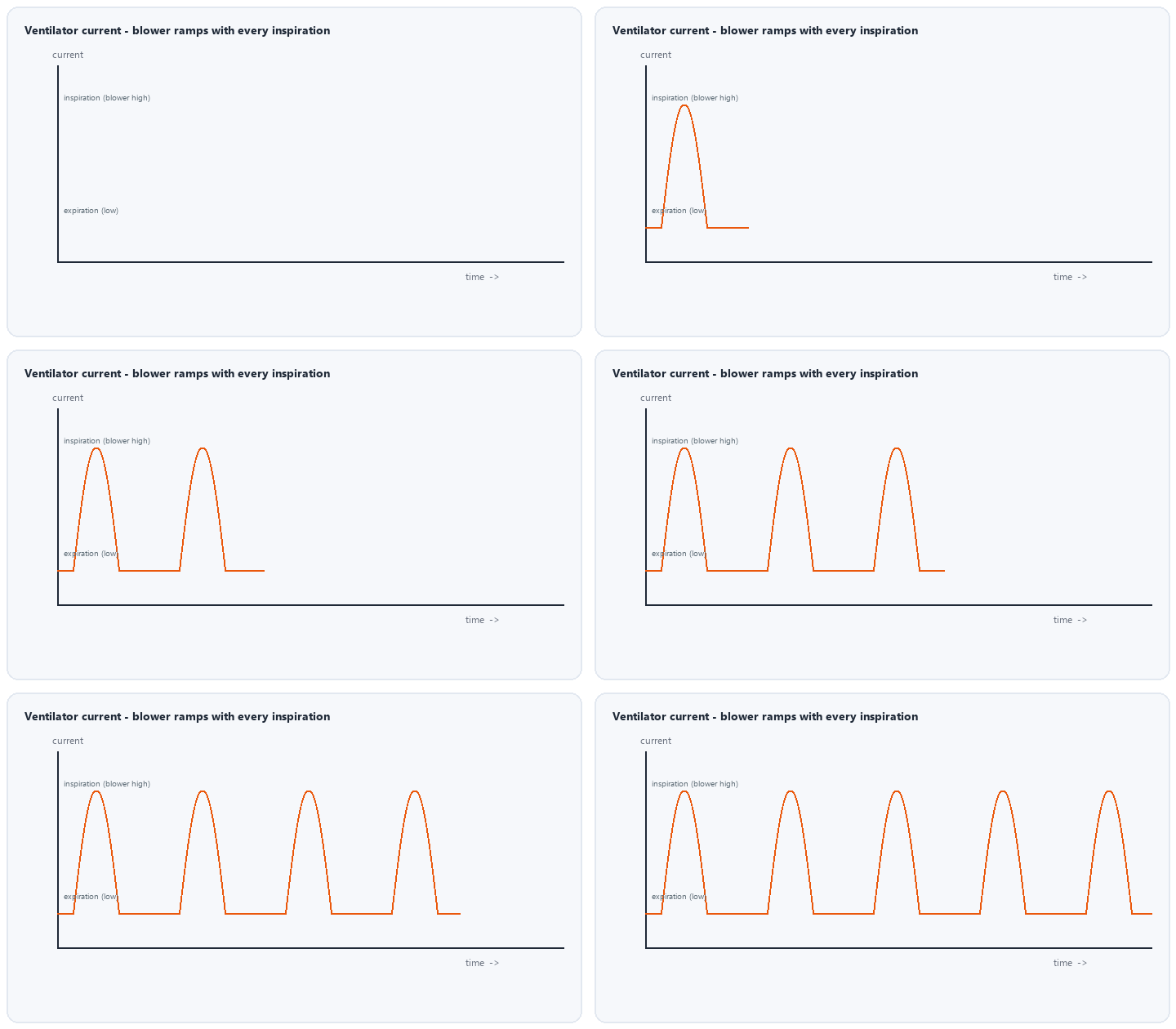
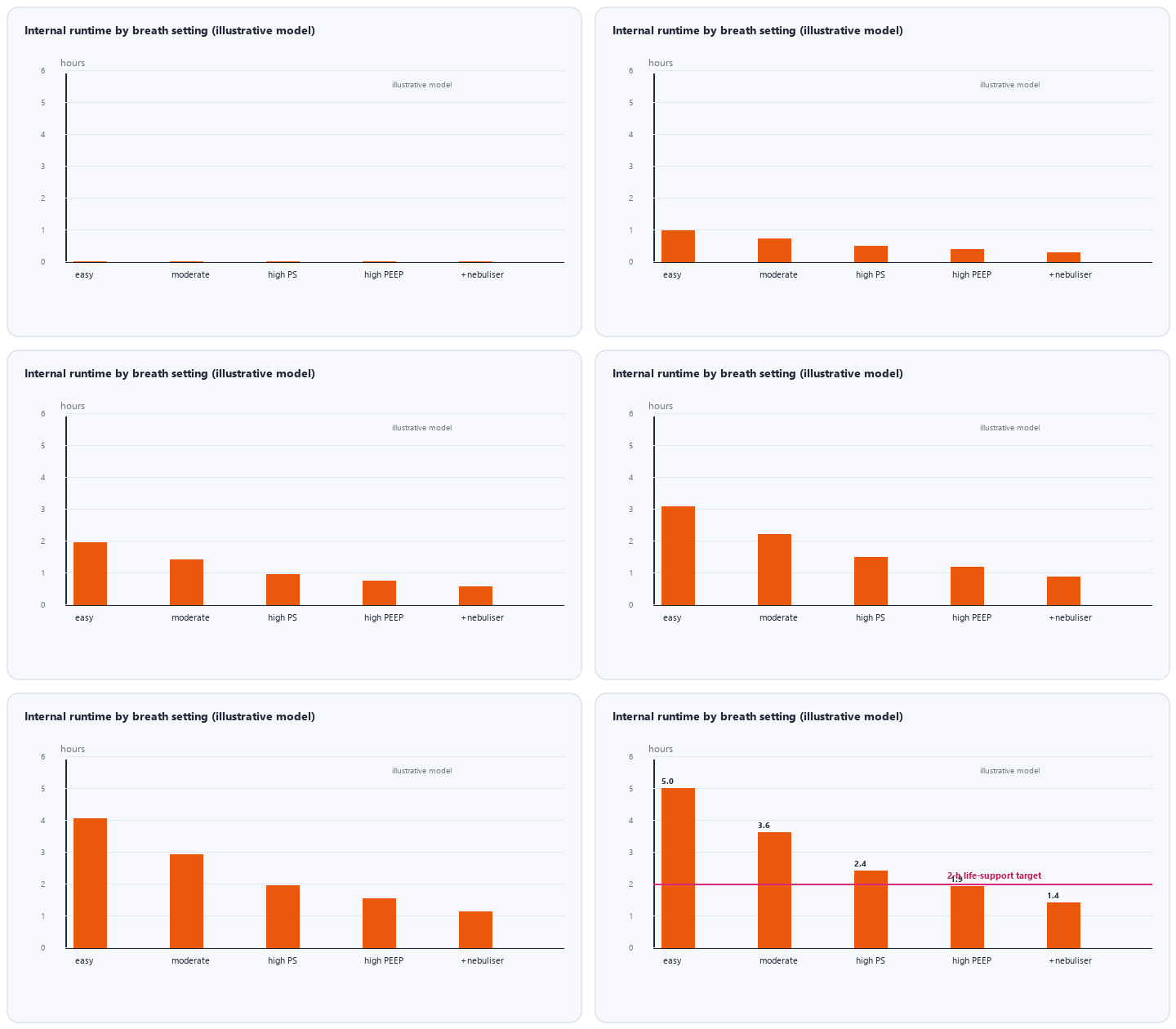
Unlike a monitor's relatively steady floor, a ventilator's current is intrinsically periodic with respiratory rate and strongly dependent on ventilator settings: high pressure-support breaths, high PEEP, lung-protective modes in stiff adult lungs, and nebuliser or oxygen-enrichment functions all raise blower energy per breath. A lung-compliance change — a patient "fighting" the ventilator or an obstructed filter — increases instantaneous power. Sizing therefore has to cover the worst-case clinical setting, not a nominal tidal volume in a compliant test lung.
Critical-care ventilators are governed by ISO 80601-2-12 (the successor to IEC 60601-2-12:2001, with the 2020 and 2023 editions aligned to the third edition of IEC 60601-1), alongside collateral and particular standards such as ISO 80601-2-55 for respiratory gas monitors and IEC 60601-2-49 for multifunctional monitoring. As life-support equipment, a ventilator must sustain its essential performance — delivering the set breath within accuracy limits — during loss of the external supply, with staged alarms under IEC 60601-1-8. Manufacturers publish internal-battery endurance under defined settings precisely because this is a safety claim, not marketing.
Intra-hospital transport (CT, OR, ICU-to-ward) and emergency/EMS ventilators run entirely on internal power for extended periods, and military/field transport ventilators add shock, vibration and temperature extremes. The battery mission must cover the expected transport duration plus a safety margin for delays in lifts and imaging suites, and the pack must deliver blower power at low state of charge without pressure-delivery errors.
The blower's high, breath-locked demand favours cells with low internal resistance and robust pulse delivery. NiMH offers high-rate capability, an aqueous and intrinsically safe chemistry, tolerance of the constant float/float-discharge pattern of an ICU device docked at the bedside for weeks, and simple charging — reasons it persists in transport and ruggedised ventilators where lithium's weight advantage is not decisive. Paper B sizes the pack and compares chemistries quantitatively; Paper C walks the ISO 80601-2-12 validation and testing trail.
Weijiang Power manufactures high-rate NiMH cells and custom packs for ventilator and respiratory OEMs: low-resistance matched cells for blower pulse delivery, welded construction, NTC and protection, and IEC 62133-1/UN 38.3 documentation. Send your worst-case breath settings, target internal endurance and enclosure, and we will size a pack that holds essential performance to the declared limit.


