Article 13 of Regulation (EU) 2023/1542 and Annex VI introduce the most detailed battery labeling regime Europe has ever had, arriving in waves between 2024 and 2027. Because labels must be designed, tooled and printed long before goods arrive, nickel-metal hydride (NiMH) exporters need the schedule and artwork rules now. This paper fixes the dates, dimensions and content of every mark a NiMH cell, pack and carton must carry.
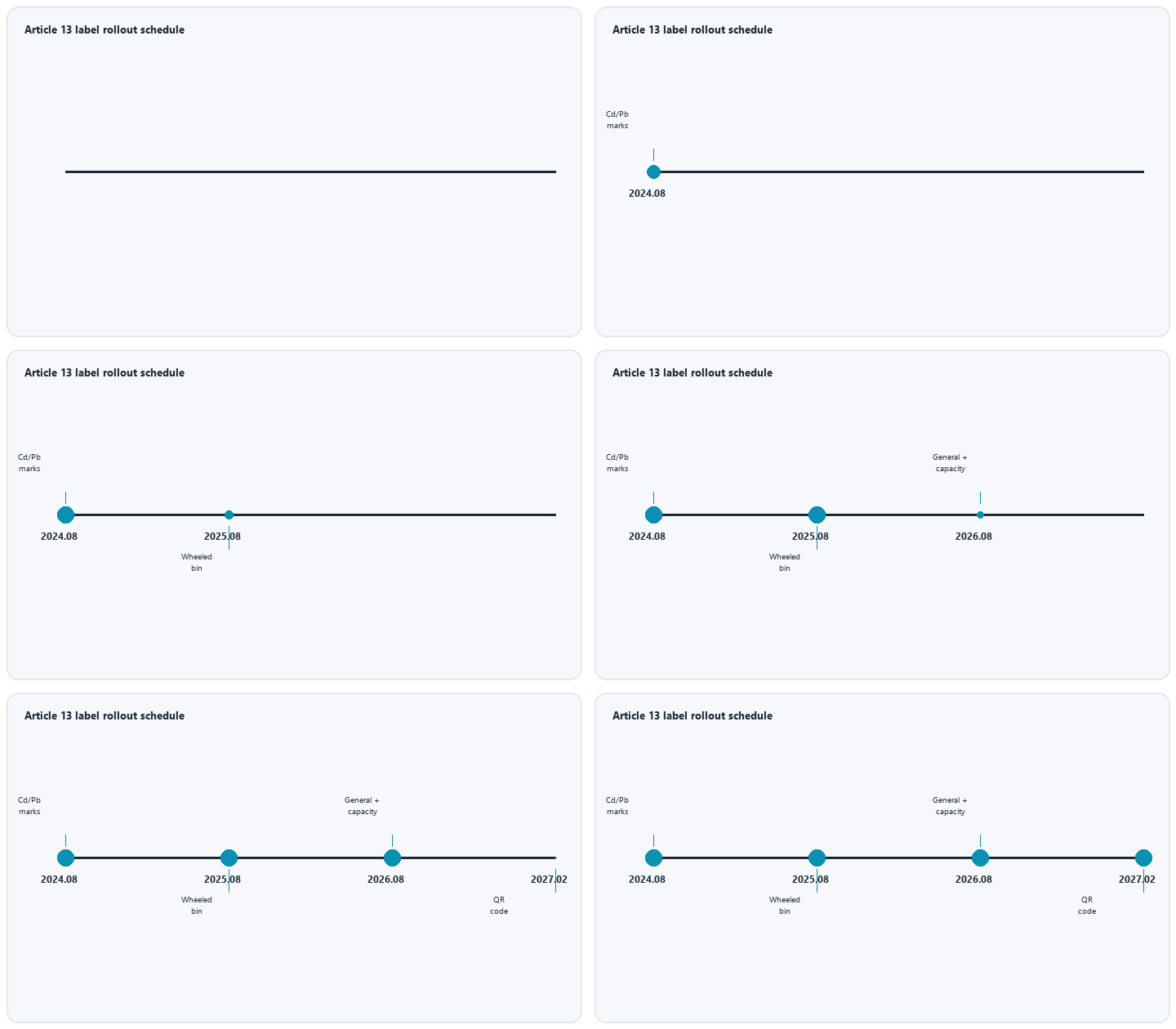
The rollout is deliberately sequential. Lead and other heavy-metal chemical symbols have applied since 18 August 2024; capacity information and heavy-metal symbols followed on 18 August 2024 for rechargeable portable, LMT and SLI batteries (non-rechargeable portable capacity labeling follows the same Article 13 schedule); the crossed-out wheeled-bin separate-collection symbol has been mandatory from 18 August 2025; general battery information — manufacturer identity, battery category, place and date of manufacture, mass, capacity, chemical composition, hazardous substances other than Pb/Hg/Cd, fire-extinguishing agents and critical raw materials above 0.1 % — applies from 18 August 2026 or 18 months after the relevant implementing act, whichever is later; and the QR code linking label, symbols, DoC, due-diligence policy and waste information applies from 18 February 2027.
The crossed-out wheeled bin (EN ISO 7000-1135) must cover at least 3 % of the area of the largest side of the battery, up to a maximum of 5 × 5 cm; for cylindrical cells it covers at least 1.5 % of the cylindrical surface area. Where the symbol would be smaller than 0.47 × 0.47 cm on the battery itself, it moves to the packaging at no less than 1.0 × 1.0 cm. Chemical symbols "Cd", "Pb" or "Hg" appear in a box directly beneath the bin where thresholds are exceeded — cadmium above 0.002 %, lead above 0.004 % — each symbol at least one quarter the size of the bin. A cadmium-free NiMH cell carries the bin but no chemical box, which is itself a visible compliance signal.
Rechargeable portable, LMT and SLI batteries must state rated capacity in mAh or Ah and Wh (where applicable), nominal voltage and expected cycle/endurance parameters per the Annex III/IV schedule. From 2026 the general-information block adds manufacturer name and registered trade mark, postal and electronic address, category, place and date of manufacture, net mass, rated energy, chemical system, substances of concern beyond the three heavy metals, applicable extinguishing agents and any critical raw material above 0.1 %. For small cells this information may be split between the cell, a peel-back label and packaging, but the link between them must be unambiguous and language-neutral symbols are encouraged.
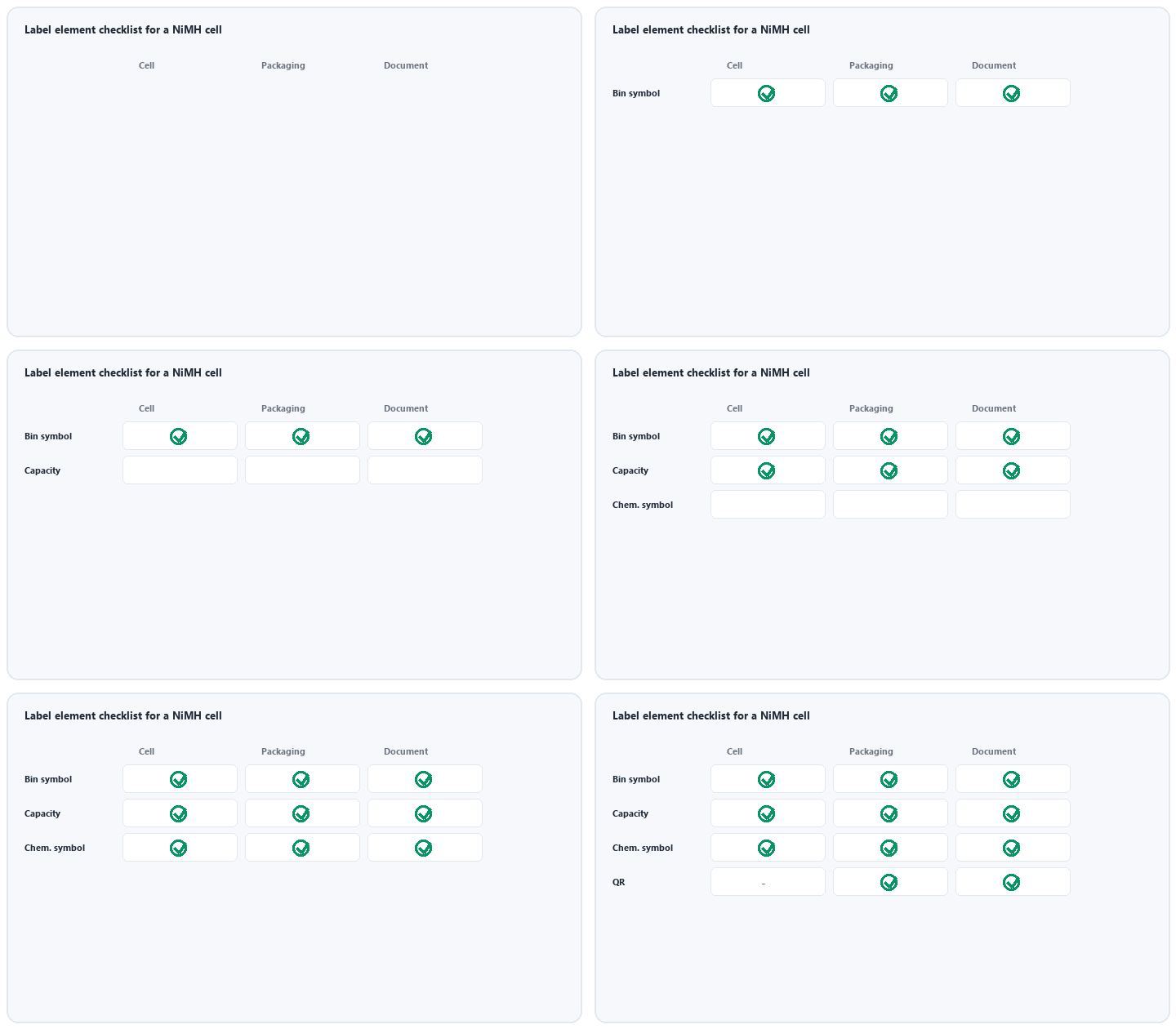
From 18 February 2027 every battery (with narrow exceptions) carries a QR code generated per the implementing-act specification. Scanning it must reach: the label information, the separate-collection and heavy-metal symbols in digital form, the EU Declaration of Conformity, the battery due-diligence policy, and end-of-life information for holders and recyclers. For LMT, EV and industrial batteries above 2 kWh the QR opens the digital battery passport with its three-tier visibility (public, legitimate-interest, authority). Portable NiMH cells need the information landing page, not the passport — a difference that saves a 71-data-point infrastructure project for most NiMH exporters.
Labels are a frequent source of non-conformity because artwork is frozen months before shipment. A controlled workflow keeps four synchronized layers: master artwork files with the bin symbol at verified proportions; a per-family content sheet mapping each Article 13 datum to its source document; multilingual packaging layouts per member state; and a change-control rule linking any chemistry, manufacturer-name or address change to artwork reissue. Printers should receive vector symbols rather than redrawn bitmaps, and first-article inspection should measure symbol percentage against the largest side, not eyeball it.
Weijiang Power supplies NiMH cells and packs with Article 13-ready label artwork on the current schedule: correctly proportioned wheeled-bin marks, capacity and chemistry block, no heavy-metal flags on cadmium-free cells, and a 2027-ready QR landing structure. Send us your label template or carton dieline and our compliance designers return print-ready artwork plus the content sheet tying every mark to its test report and Declaration of Conformity.


