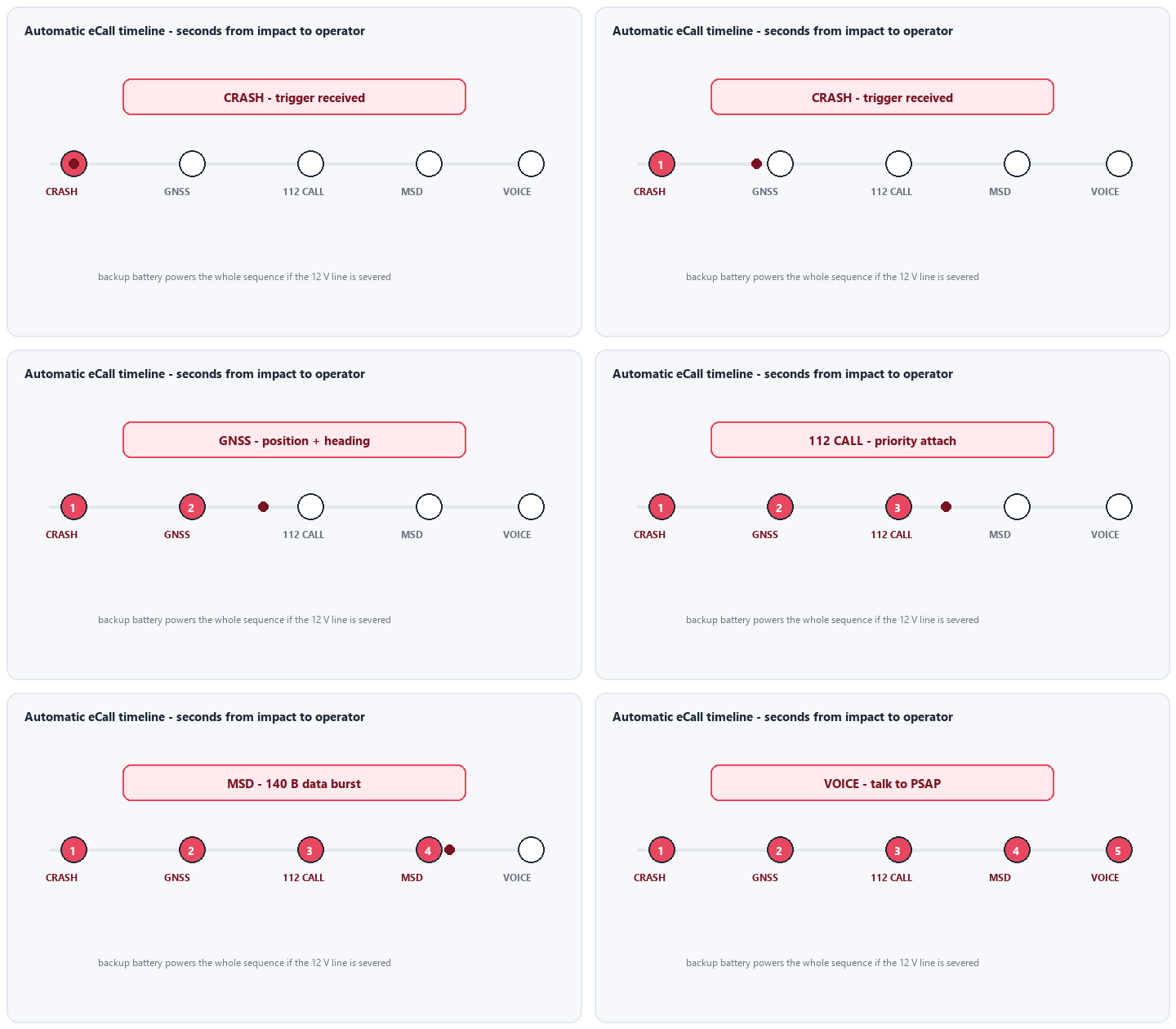
An emergency call is the most important function a connected vehicle will ever perform — and it must work in the worst possible moment: after a collision, possibly with the main battery torn away, within seconds, and without any action from an injured driver. This article traces an eCall from the instant of impact to the conversation with an emergency operator, describing the in-vehicle system, the cellular path to the public safety answering point, and how voice and crash data travel together. Later articles in this series cover crash-trigger logic, global standards, the data message and the backup battery in depth.
The eCall in-vehicle system is usually integrated into the T-Box and comprises: a trigger path from the restraint control module (airbag ECU); the cellular modem; a GNSS receiver for position; an audio chain with microphone, amplifier and speaker; a human-machine button for manual activation; a controller that orchestrates the sequence; and an autonomous backup power source. A parallel "TPS eCall" route may connect to a third-party service provider, but regulation guarantees that the 112-based public service always remains available.
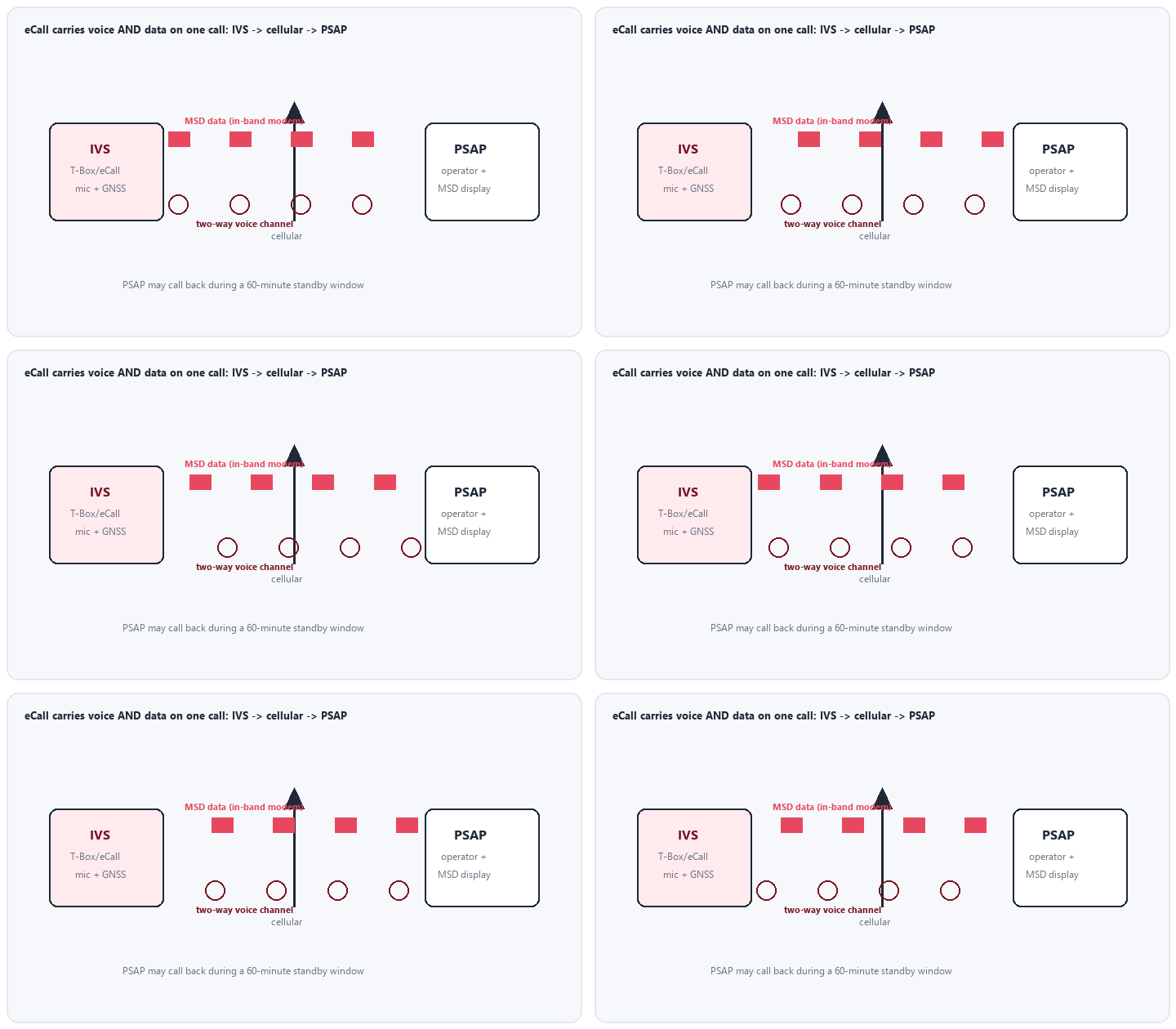
A conventional emergency call carries only voice. eCall adds a structured data message without needing a separate data connection: after the voice call is established, the IVS and the PSAP modem synchronise and the MSD is transmitted as an in-band modem signal — audio-frequency tones engineered to survive the same speech channel. Once the data burst is acknowledged, the channel switches to voice. This elegant design means eCall works on legacy circuit-switched networks anywhere in the world; next-generation IMS-based networks instead carry the MSD as a SIP message body, covered in our MSD/NG-eCall article.
The public safety answering point must be equipped to decode the in-band modem burst, parse the MSD and display it to the call-taker alongside the voice conversation: precise location, direction of travel, vehicle identity, fuel/propulsion type, number of occupants (where available) and timestamp. Standards such as EN 16454 define the end-to-end conformance tests ensuring the IVS and PSAP interoperate regardless of manufacturer, network or country — the "interoperable EU-wide" principle at the heart of the mandate.
The sequence has no single point of failure by design: cross-operator network access, A-GNSS for fast fixes, buffered last-known position, backup battery for power loss, and retries with fallback to the best available radio technology. Type-approval testing (UN R144, EN 16454, ETSI TS 103 412) deliberately injects failures — ignition off, main battery disconnected, weak signal — to prove the call still completes within mandated time limits.
When crash damage disconnects the vehicle battery, the eCall module has one chance to work — on its internal backup pack. Weijiang Power designs wide-temperature, long-life NiMH and lithium backup cells and custom packs for T-Box/eCall terminals, built to sustain modem transmit pulses, GNSS fix and a full voice session after impact, with UN 38.3, IEC 62133 and customer validation documentation. Share your module's current profile and talk-time target, and our engineers will size the backup power that makes this entire chain possible.


